The 11th Our Ocean Conference (OOC11), taking place in Mombasa from 16 to 18 June 2026, is the most consequential gathering in global ocean governance in over a decade. For the first time since the conference was established in 2014, it is being held on African soil. The theme, "Our Ocean, Our Heritage, Our Future," signals an important shift: the communities, institutions, and nations most dependent on the ocean for food security, livelihoods, and climate resilience are no longer on the periphery of these conversations. They are central to them.
Global Compact Network Kenya, as the host organization of Ocean Centres Kenya, is participating in OOC11 as a natural extension of a body of work that has been building across Kenya's coastline for the past year. Judy Njino, Executive Director of the Network, is in Mombasa this week representing that work and the growing community of Kenyan businesses, institutions, coastal communities and partners who have contributed to it.
A Conference Built on Commitments
Since its founding, the Our Ocean Conference has operated on a principle that distinguishes it from most international forums: it requires concrete commitments, not declarations. Over eleven editions, the conference has mobilized more than 2,900 pledges worth approximately $169 billion, with the majority of commitments either completed or actively in progress. The 2025 edition in Busan (Republic of Korea) alone generated over 200 new pledges worth $9.1 billion. OOC11 is expected to advance further action across six priority areas: Marine Protected Areas, Sustainable Blue Economies, Climate and the Ocean, Maritime Security, Sustainable Fisheries, and Marine Pollution.
Cabinet Secretary Hassan Ali Joho, who formally accepted the Our Ocean Conference hosting mandate in Busan on behalf of Kenya, has grounded that commitment in policy through Kenya's National Blue Economy Strategy, which sets a target of growing the blue economy from KES 40 billion to KES 350 billion by 2030 and supports the livelihoods of four million Kenyans who depend on the sea. President William Ruto is expected to formally open the conference tomorrow, 17 June, via a virtual keynote in a ceremony that will bring together heads of state, ministers, and senior representatives from governments, international organizations, the private sector, and civil society for three days of leadership plenaries, high-level thematic panels, and side events across the six conference action areas.
Ocean Centres Kenya: A Year of Grounded Work
Ocean Centres Kenya was launched by Global Compact Network Kenya in Mombasa in August 2025, as part of a global initiative established by the United Nations Global Compact's Ocean Stewardship Coalition and supported by Lloyd's Register Foundation. Kenya is one of seven countries to host an Ocean Centre, alongside Brazil, Ghana, India, Bangladesh, Indonesia, and the Philippines. The initiative operates as a locally-led, multi-stakeholder platform focused on four priority areas identified as central to Kenya's maritime economy: shipping and ports, fishing and aquaculture, offshore renewable energy, and finance and investment.
Between August 2025 and April 2026, Ocean Centres Kenya completed an eight-workshop consultation series, convening stakeholders across Mombasa, Kilifi, Lamu, Diani, and Kwale. The participants included fishers, maritime regulators, county government representatives, private sector leaders, researchers, civil society organizations, and coastal community members. The workshops were designed to surface the practical safety challenges shaping Kenya's ocean economy and to generate evidence-based recommendations for action. Topics covered ranged from occupational safety and decent work in small-scale fisheries to decarbonization standards in shipping, green port infrastructure, offshore energy frameworks, and the conditions needed to unlock sustainable blue finance.
A consistent finding across the series was that safety cannot be treated as a secondary consideration in blue economy development. In fishing and aquaculture, inadequate safety standards translate directly into lost lives and compromised livelihoods. In shipping and ports, they affect trade efficiency and worker dignity. In offshore renewables, they shape the integrity of infrastructure development. In finance and investment, they determine risk, investor confidence, and the long-term sustainability of the sector. Ocean Centres Kenya has advanced safety as a practical enabler of economic growth rather than a constraint on it.
The series concluded in April 2026 with a national validation forum in Diani, where stakeholders reviewed and affirmed the insights generated across all eight workshops. The program has now entered its national reporting phase, with a framework document under development that will consolidate recommendations and support coordination across Kenya's maritime and blue economy institutions. That report will also contribute to a global Ocean Centres Manifesto, connecting Kenya's local findings with those of Ocean Centres in six other countries.
15 June: Translating African Ocean Ambitions into Investment
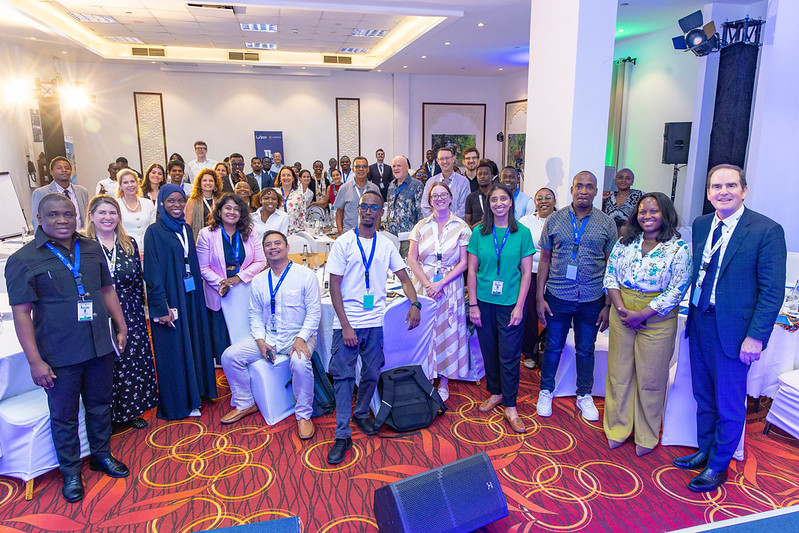
The day before OOC11 officially opened, Ocean Centres convened a Business and Investment Forum at PrideInn Paradise in Mombasa, titled "Unlocking Investment in Africa's Safe and Sustainable Ocean Economy". The workshop was hosted in partnership with the Government of Kenya, World Resources Institute (WRI), the One Ocean Finance Facility (OOF), and the UN Environment Programme (UNEP), and brought together over 100 participants from Member States, ocean industries, financial institutions, international organizations, philanthropic foundations, and research institutions.
The workshop was built around a practical challenge that affects blue economy development across the African continent: while global commitments to ocean finance continue to grow, many countries face structural barriers in converting ocean policy ambitions, sector strategies, and emerging blue economy priorities into bankable, risk-mitigated investment pipelines. Capital is increasingly available. Structured pipelines, too often, are not.
Patricia Furtado de Mendonça, Global Lead for Ocean Centres at the United Nations Global Compact, opened the workshop and connected the day's discussions to the broader ambition of the Ocean Centres initiative globally. Ruth Boumphrey, Chief Executive of Lloyd's Register Foundation, whose organization co-founded the initiative, contributed a strategic perspective on the relationship between safety, investment, and long-term blue economy value. The workshop also brought into sharp focus the continental dimension of the Ocean Centres network: Tolu Lacroix MIoD, Executive Director of UN Global Compact Ghana, was in the room, as was Ghana's Minister for Fisheries and Aquaculture, Hon. Emelia Arthur (MP), whose presence alongside senior government counterparts grounded the discussion in the lived policy realities of two of Africa's most active ocean economies.
Suzanne Johnson , Senior Advisor for the Ocean at the United Nations Global Compact, framed both co-design sessions, guiding participants through an examination of structural barriers to blue finance pipelines and into applied discussion on how national ocean strategies in Kenya and Ghana can be translated into coordinated investment pathways. Dr Susan C Gardner, Ph.D., Director of the Ecosystems Division at the United Nations Environment Programme, brought the environmental governance lens that anchored the investment conversation within the broader imperative of ocean health.
The workshop was organized into eight roundtable discussions, each facilitated by leaders from organizations across development finance, investment, conservation, and maritime industries. The discussions examined ocean governance and strategic planning, blue finance pipelines, shipping and port value chains, circular economy models, technology and innovation, biodiversity and fisheries, youth and community engagement, and institutional pathways for national action.
Ambassador Peter Thomson, the United Nations Secretary-General's Special Envoy for the Ocean, delivered the closing remarks. His long-standing position, that the challenges facing ocean governance are solvable with sustained political will and coordinated institutional action, reinforced the message of the day: the frameworks and mechanisms exist, the investment appetite is growing, and what is needed now is structured pipelines, stronger coordination, and consistent national leadership.
A networking reception followed the formal program, extending the dialogue that had taken place across the roundtables and continuing to build the cross-sector relationships on which credible ocean investment depends.
Africa's Role in Shaping the Global Ocean Agenda
OOC11 continues through 18 June, with leadership plenaries, thematic panels, and official side events bringing governments, civil society, the private sector, and international institutions together to advance commitments across all six priority areas.
The significance of this edition extends beyond its location. African governments, institutions, and communities have for too long been positioned primarily as recipients of global ocean frameworks rather than contributors to their design. The work of Ocean Centres Kenya, and the participation of African leaders, experts, and practitioners across the OOC11 program, reflects a more accurate picture of where leadership in ocean sustainability, safety, and governance actually resides.
Ocean Centres Kenya enters the OOC11 period having completed a full cycle of national engagement. The evidence it has gathered, the partnerships it has built, and the recommendations it is developing are a contribution to the global knowledge base on what safe and sustainable ocean economies require in practice. Ocean Centres Kenya's participation in OOC11 is grounded in that record of work, and in the ongoing effort to ensure that African priorities are reflected in the global commitments the conference produces.